

If a Tree Falls in the Forest & No One is there it hear it, does it make a sound?

Few things are more frustrating for a business owner than investing time and money into a website only to watch it sit quietly without generating phone calls, form submissions, or new customers. In many cases, the website looks professional, accurately describes the company’s services, and even receives compliments from existing customers. Nevertheless, weeks or months pass with little to show for the investment. Naturally, this leaves many business owners asking the same question: “Why isn’t my website generating leads?”
The answer is usually more complicated than simply having a “bad” website. In fact, many websites that fail to produce leads are visually attractive and technically functional. The real issue is that lead generation requires several different systems working together. A website must be visible, answer customer questions, establish credibility, and make it easy for visitors to act. When one of those pieces is missing, lead generation often suffers.
Visibility Comes Before Website Lead Generation

One of the most common problems we encounter is a simple lack of visibility. After all, before a website can generate leads, potential customers must be able to find it.
Unfortunately, many business owners assume that launching a website automatically makes it visible online. However, search engines do not work that way. Every day, businesses compete against thousands of other websites for attention. Consequently, even a beautifully designed website may receive very little traffic if there is no strategy behind helping people discover it.
Think of it this way. If you opened the nicest retail store in town but built it on a road nobody traveled, sales would likely be disappointing regardless of how impressive the building looked. The same principle applies online. Unless a website is supported by search engine optimization, answer engine optimization, local search visibility, social media activity, online reviews, or paid advertising, there may simply not be enough visitors arriving to generate meaningful inquiries.
As a result, the first question should not be whether the website looks good. Instead, business owners should ask whether enough qualified prospects are actually finding it.
Traffic Alone Doesn’t Guarantee Results
At the same time, more traffic is not always the answer. Many websites receive a steady stream of visitors but still struggle to generate leads. When that happens, the problem is often not visibility but relevance. In other words, the website may be attracting people who have no intention of becoming customers.
For example, a local roofing contractor could receive thousands of visitors from around the country reading general roofing articles. While those visitors increase website traffic numbers, they are unlikely to hire a roofing company located hundreds or thousands of miles away. Similarly, a law firm may attract readers researching legal topics that have little connection to the services the firm actually provides.
Because of this, successful SEO is not simply about attracting more visitors. Rather, it is about attracting the right visitors. Businesses benefit most when their website reaches people who are actively searching for the exact services they offer within the areas they serve.
Confusing Messaging Can Drive Visitors Away

Even when the right people arrive on a website, there is another challenge: keeping their attention. Most visitors make decisions remarkably quickly. Within just a few seconds, they want to understand who the company is, what services it provides, and whether it appears capable of solving their problem. If those answers are not immediately clear, many users simply leave and continue their search elsewhere.
This is where business owners sometimes run into trouble. Because they know their industry so well, they often write website copy that makes perfect sense to them but feels confusing to potential customers. Industry jargon, technical terminology, and vague marketing phrases may sound impressive, yet they often fail to communicate what matters most.
Instead, visitors should quickly understand three things:
- What the company does
- Who the company serves
- How to get in touch
When those answers are obvious, visitors are far more likely to stay engaged and continue exploring the website.
Modern Consumers Want Answers Before They Call

Consumer behavior has changed dramatically over the past several years. Rather than contacting a company immediately, most people begin by researching their questions online.
Before hiring an attorney, calling a plumber, scheduling a consultation, or requesting an estimate, consumers often spend time gathering information. They want to understand their options, learn about potential costs, and determine whether a company appears knowledgeable and trustworthy.
Consequently, businesses that fail to answer customer questions online often miss valuable opportunities to build relationships with prospective clients. A website that only lists services may struggle to compete against one that actively educates visitors through blogs, FAQs, service pages, and helpful resources.
This is one reason content marketing remains so powerful. Every question answered on a website creates another opportunity for potential customers to discover the business. Furthermore, educational content helps establish expertise while building confidence long before the first phone call ever occurs.
Trust Often Determines Whether Someone Becomes a Lead
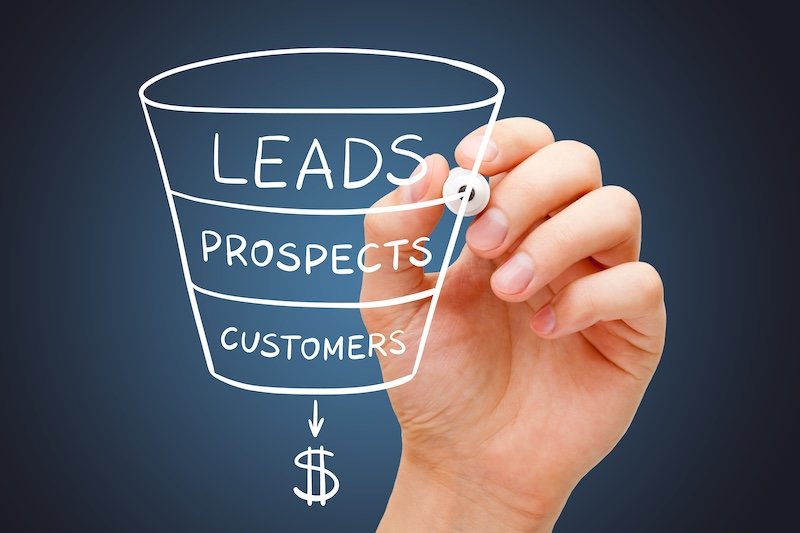
Generating traffic is important, but traffic alone rarely produces results. Before someone reaches out to a business, they typically want reassurance that they are making a smart decision.
As a result, trust plays a major role in website performance. Visitors often look for signs that a company is experienced, credible, and capable of delivering on its promises. Without those indicators, even highly interested prospects may hesitate to make contact.
Fortunately, trust can be built in many different ways. Positive reviews, client testimonials, case studies, before-and-after photos, awards, certifications, years in business, and detailed team information all help reassure visitors that they are dealing with a legitimate and qualified organization.
In many cases, the difference between a website visitor and a qualified lead comes down to confidence. The more trust a website establishes, the more likely visitors are to take the next step.
Visitors Need a Clear Path Forward

Surprisingly, some websites lose potential leads simply because visitors are unsure what to do next. Business owners often assume that customers will naturally find the contact page or locate the phone number on their own. However, online behavior does not always follow that logic. People appreciate clear direction, especially when they are already evaluating multiple companies at the same time.
For that reason, every page should make the next step obvious. Whether the goal is scheduling a consultation, requesting an estimate, calling the office, or completing a contact form, visitors should never have to search for a way to connect.
Furthermore, calls to action should feel natural and helpful rather than aggressive. When users understand what action to take and why they should take it, conversion rates often improve significantly.
Search Has Changed, and Websites Must Change Too
A few years ago, ranking on Google was the primary goal for most businesses pursuing digital marketing. While search engine optimization remains extremely important, the online landscape is evolving rapidly.
Today, consumers increasingly receive answers through AI-powered search tools, voice assistants, featured snippets, and answer engines. Consequently, businesses must think beyond keywords alone. They need content that directly addresses the questions people are asking while demonstrating expertise in a clear and trustworthy manner.
This is where Answer Engine Optimization, or AEO, enters the conversation. Rather than focusing exclusively on rankings, AEO helps businesses position their content to become the answer itself. As search technology continues evolving, companies that combine traditional SEO with AEO strategies will often have a competitive advantage.
A Website Should Be More Than an Online Brochure

Ultimately, many websites fail to generate leads because they were designed to look good rather than perform a specific marketing function. They showcase the company, display attractive images, and provide basic information, but they do not actively work to attract visitors, answer questions, establish trust, and convert prospects into customers.
The good news is that most of these problems can be addressed. A website does not necessarily need a complete rebuild to improve results. In many cases, strategic content development, improved SEO and AEO, stronger calls to action, better trust signals, and enhanced user experience can dramatically improve lead generation over time.
The real question is not whether websites still work. They absolutely do. Instead, business owners should ask whether their website has been intentionally built to guide visitors through the journey from discovery to trust to action. When those pieces come together, a website becomes far more than an online brochure—it becomes one of the most valuable lead-generation tools a business can own.
About Mountain Marketing Group in Eagle, Idaho
Mountain Marketing Group helps businesses throughout Idaho and across the United States improve their online visibility through SEO, AEO, website development, content marketing, Google Business Profile optimization, social media marketing, and digital advertising. Based in Eagle, Idaho, Mountain Marketing Group specializes in creating lead-generating websites and content strategies designed to help businesses reach new heights. Whether you need a new website, ongoing SEO support, or a comprehensive digital marketing strategy, Mountain Marketing Group can help turn online visibility into measurable business growth.