

If you’ve ever searched for “roofing contractor near me,” “best chiropractor in Boise,” or “computer repair in Meridian,” you’ve probably noticed that certain businesses consistently appear near the top of Google’s search results while others seem almost impossible to find. To many business owners, it can feel as though Google has a secret formula that only a select few companies understand. But how do you appear at the top of Google rankings?
The truth is much less mysterious.
Google’s goal has always been simple: provide the best possible answer to every search. When someone searches for a local business, Google wants to recommend companies that are most likely to solve that person’s problem quickly, accurately, and with a positive customer experience. Rather than rewarding whoever spends the most money or has the oldest website, Google’s algorithms evaluate hundreds of signals that indicate quality, relevance, authority, and trustworthiness.
Understanding those signals can dramatically improve your visibility online. More importantly, it helps you focus your marketing efforts on strategies that continue producing results long after an advertising campaign has ended.
Relevance: Does Your Business Match the Search?

The first question Google asks is surprisingly straightforward: Does this business actually offer what the searcher needs?
Imagine someone searches for water heater repair in Boise. Although every plumbing company may be capable of replacing a water heater, Google is far more likely to recommend businesses whose websites clearly demonstrate expertise in that specific service. Companies with dedicated service pages, educational blog articles, FAQs, and detailed descriptions about water heater repair have a significant advantage over businesses that simply list “plumbing” on their homepage.
Google builds that understanding from numerous sources, including:
- Individual service pages
- Educational blog articles
- Frequently Asked Questions
- Google Business Profile categories
- Website page titles and descriptions
- Overall website content
- Internal linking between related topics
This is one reason businesses that publish helpful content regularly often outperform competitors whose websites rarely change. Every quality article gives Google another opportunity to understand exactly what your business does and when it should recommend you.
Location Matters—But It’s More Than Your Address

Many business owners assume local SEO simply means adding their city name throughout their website. While location certainly plays an important role, Google looks much deeper than your mailing address. For example, someone searching from downtown Boise will usually receive different results than someone searching from Meridian, Eagle, or Nampa—even if they’re looking for the exact same service. Google’s goal is to provide businesses that are convenient for the individual performing the search.
However, proximity alone isn’t enough. Google also looks for evidence that your company genuinely serves the surrounding communities. Businesses often strengthen these local signals by creating content that references nearby cities, neighborhoods, landmarks, local events, and regional topics that matter to prospective customers.
Your Google Business Profile, consistent business citations across online directories, local backlinks, and customer reviews mentioning specific communities all reinforce your geographic relevance.
Authority Builds Trust

Imagine two businesses offering identical services. One has published dozens of educational articles, earned hundreds of positive reviews, appears on respected industry websites, and has been mentioned by local organizations. The other has a five-page website with very little content and almost no online presence.
Which company appears more trustworthy?
Google asks itself that same question every day.
Authority develops over time as your business consistently demonstrates expertise and earns recognition from other reputable sources. Search engines view these endorsements as evidence that your company deserves greater visibility.
Some of the strongest authority signals include:
- High-quality backlinks from reputable websites
- Consistent publication of educational content
- Positive customer reviews
- Mentions from local organizations
- Industry awards and certifications
- Strong user engagement on your website
Unlike paid advertising, authority cannot be purchased overnight. It grows steadily through consistent effort, which is why long-term SEO almost always outperforms short-term marketing tactics.
Helpful Content Continues to Matter

One of the biggest changes in Google’s ranking systems over the past several years has been its increased emphasis on genuinely helpful content. Years ago, some companies tried to rank by stuffing pages with keywords or creating dozens of nearly identical pages targeting every nearby city. Those tactics no longer work. Today, Google rewards businesses that answer real questions.
Think about the questions customers ask every day:
- How much does this service cost?
- How long will it take?
- What should I expect?
- Can I do this myself?
- When should I call a professional?
Every one of those questions represents an opportunity to create content that helps potential customers while simultaneously improving your search visibility. Educational blog articles, buying guides, comparison pages, FAQs, and how-to resources all demonstrate expertise. As Google continues expanding its Answer Engine Optimization (AEO) capabilities, businesses that provide clear, accurate answers are becoming increasingly visible—not only in traditional search results but also in AI-generated search experiences.
Reviews Influence Rankings
Customer reviews affect far more than your reputation—they’re also one of Google’s strongest local ranking signals. Positive reviews demonstrate that real customers had positive experiences with your business. They also provide Google with additional information about your products, services, professionalism, and customer satisfaction.
- Quantity matters.
- Quality matters.
- Freshness matters.
Even the words customers use in their reviews can reinforce your relevance for particular services or locations. Responding professionally to reviews—both positive and negative—also shows Google that your business actively engages with customers and values feedback. Rather than asking for dozens of reviews at once, successful businesses make requesting reviews part of their normal customer service process so new reviews continue appearing throughout the year.
Don’t Overlook Your Google Business Profile
For many local searches, your Google Business Profile receives more visibility than your actual website. When someone searches for businesses nearby, Google often displays the Local Pack—a group of businesses accompanied by maps, reviews, hours, phone numbers, and directions. Appearing there can dramatically increase calls and website visits.
A fully optimized profile includes:
- Accurate contact information
- Current business hours
- Correct business categories
- Service descriptions
- High-quality photos
- Regular Google Posts
- Customer reviews
- Questions and Answers
Many business owners claim their profile and never update it again. However, businesses that regularly post updates, upload new photos, answer questions, and maintain accurate information often send stronger quality signals to Google.
Website Performance Still Matters
Excellent content won’t perform as well if visitors become frustrated trying to use your website. Google measures many aspects of user experience, including page speed, mobile responsiveness, navigation, and overall usability. A website that loads quickly, works well on smartphones, and makes information easy to find generally performs better than one that feels outdated or difficult to navigate.
This doesn’t mean every website must contain elaborate animations or expensive custom programming. In fact, simpler, well-organized websites frequently outperform more complicated designs because visitors can quickly find what they need.
SEO Is an Ongoing Process
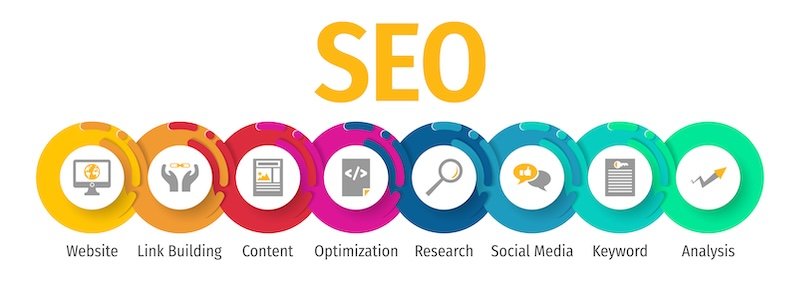
One of the most common misconceptions about SEO is that it’s something you complete once. Unfortunately, it doesn’t work that way. Your competitors continue improving their websites.
- Google continually updates its algorithms.
- Customer search behavior evolves.
- New businesses enter the market.
- Because of these constant changes, successful SEO requires consistent attention rather than one-time optimization. Regular blogging, website updates, Google Business Profile management, review generation, backlink development, and ongoing technical improvements all work together to strengthen your online presence over time.
Businesses that consistently invest in these activities usually build momentum that becomes increasingly difficult for competitors to overcome.
So, How Do You Rank Higher on Google?
While Google evaluates hundreds of ranking signals, the fundamentals remain remarkably consistent. Businesses that earn strong visibility typically focus on the following:
- Create helpful, informative website content.
- Develop pages for each primary service.
- Keep your Google Business Profile fully optimized.
- Earn genuine customer reviews consistently.
- Build authority through quality backlinks.
- Improve website speed and mobile performance.
- Publish educational blogs on a regular basis.
- Maintain an ongoing SEO strategy rather than relying on one-time fixes.
Google’s algorithms will undoubtedly continue evolving, but one principle remains unchanged: businesses that provide the best experience for their customers usually provide the best experience for Google as well. When your website demonstrates expertise, answers questions, serves your local community, and consistently delivers value, you’re giving Google exactly what it wants to recommend.
At Mountain Marketing Group, one of the biggest misconceptions we hear is that simply launching a website should be enough to rank well. In reality, your website is only one part of a much larger picture.
About Mountain Marketing Group in Eagle, Idaho
Mountain Marketing Group helps businesses throughout Idaho and across the United States reach more qualified customers through strategic digital marketing. Our services include custom WordPress website development, Local SEO, Answer Engine Optimization (AEO), Social SEO, Google Business Profile optimization, content marketing, blogging, social media management, paid advertising, and reputation management. Our philosophy is simple: we don’t focus on generating more traffic—we focus on generating the right traffic that leads to real business growth. To learn how we can help your business reach new heights, contact Mountain Marketing Group today.