

SEO Results: Timeframe

You hire someone to optimize your website, publish new content, improve your Google Business Profile, and start building your online presence. Then comes the question nearly every business owner eventually asks: How long is this going to take? And by “this,” they mean SEO Results.
It is a reasonable question. Unfortunately, anyone who answers it with a guaranteed number of days or months probably oversimplifies how search engine optimization works. SEO does not have a universal 30-, 60-, or 90-day finish line. One business may begin seeing meaningful movement relatively quickly, while another may need considerably longer to compete for valuable search terms. Your website, competition, location, industry, existing online authority, content, and even the keywords you want to rank for can influence the timeline.
More importantly, SEO isn’t something you finish. It is an ongoing process of improving visibility as your business, competitors, search behavior, and Google itself continue to change.
When Should You Expect SEO Results?

Businesses can sometimes see early signs of progress within the first few months of an SEO campaign. Pages may begin appearing for additional searches, existing rankings may improve, Google Business Profile visibility may change, or organic website traffic may increase.
However, early movement and reaching a top position for a competitive search term are two very different accomplishments.
For example, a business might move from page five to page two relatively quickly. That represents significant progress, but it may not produce a noticeable increase in leads yet because relatively few searchers ever reach that result.
SEO therefore requires looking at the direction of progress rather than waiting for one magical day when it suddenly “works.”
Why Can’t Anyone Guarantee 90-Day SEO Results?

In a word, “No.” Because your marketing agency does not control Google. An SEO professional can improve website structure, research keywords, create useful content, strengthen local signals, address technical problems, and develop a strategy around how prospective customers search. What nobody outside Google controls is exactly when Google will crawl, evaluate, and reposition a particular page.
Your competitors also affect the equation. They are not standing still while you work on your SEO. If several competing businesses regularly publish useful content, collect reviews, improve their websites, and maintain active Google Business Profiles, earning visibility may require more effort than competing in a market where other businesses have weak online presences.
That is why legitimate SEO Results involve strategy rather than guarantees.
A New Website and an Established Website Start in Different Places

A brand-new website has little or no history with Google. Search engines need time to discover its pages, understand the business, connect it with relevant searches, and evaluate its usefulness and authority. An established website may already have years of indexed content, backlinks, traffic, and search history. That can provide a significant head start. However, age alone does not make a website strong.
An older website with thin content, technical problems, confusing navigation, outdated information, or years of neglect may require substantial work. In some cases, correcting those issues becomes the first stage of the SEO campaign before meaningful growth can occur.
Competition Changes the Timeline

Ranking for “plumber” in a competitive metropolitan area presents a very different challenge from ranking for a highly specialized service in a smaller market. Search volume matters, but so does the number and strength of businesses competing for those searches. Location can influence local SEO as well. Google considers relevance, distance, and prominence when determining local results. Consequently, a business cannot simply optimize its way into being physically closer to every person searching.
A strong local strategy instead helps Google better understand what the business does, where it operates, and why it may deserve visibility for relevant searches.
Your Website Gives Google Something to Rank

SEO cannot compensate indefinitely for a weak website. Search engines need useful pages that clearly explain services, answer customer questions, and demonstrate relevance to the searches a business wants to attract. A five-page website containing only a few sentences about each service gives Google far less information than a well-developed site with substantial service pages and useful supporting content. This is one reason Mountain Marketing Group emphasizes ongoing blogging.
A strategic blog creates opportunities to answer the specific questions prospective customers type or speak into Google and increasingly ask AI-powered search tools. Over time, those articles also build a deeper body of information around the company’s expertise and services.
Your Google Business Profile Matters for SEO Results
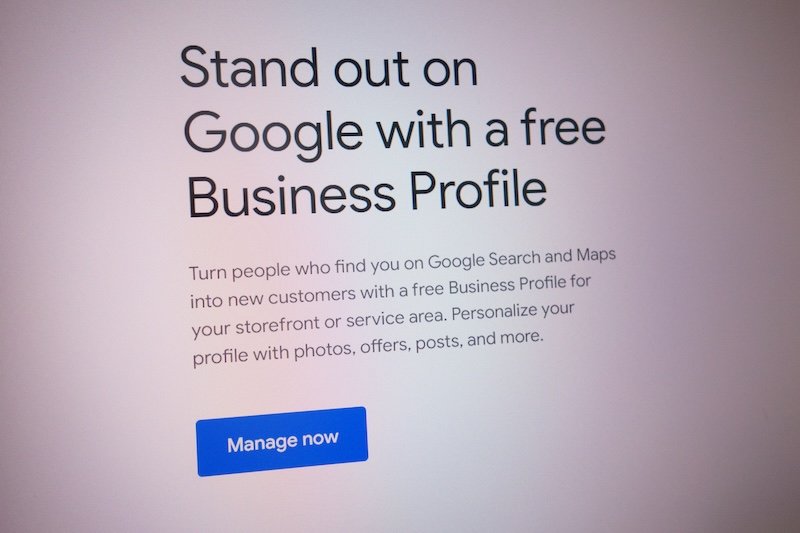
For local businesses, SEO extends beyond the website.
An accurate and active Google Business Profile can help customers find information about the business through Google Search and Maps. Reviews, photos, business information, services, and other profile elements all contribute to a company’s overall local presence.
Meanwhile, the website and Google Business Profile should reinforce one another. Consistent business information and relevant content make it easier for search engines to understand the company and connect it with appropriate searches.
SEO Rankings Rarely Move in a Straight Line
One of the hardest parts of SEO involves watching rankings fluctuate.
A page might climb, drop several positions, recover, and move again. Competitors change their websites. Google updates its systems. Search results vary based on location and other contextual factors. New content enters the competition every day.
A temporary ranking decline therefore does not automatically mean the entire strategy has failed, just as one sudden jump does not mean the work is finished.
Look at trends over time.
Are more relevant pages appearing in search? Is organic visibility expanding? Are important keywords generally moving in the right direction? Are qualified visitors finding the site? Most importantly, is search increasingly contributing to calls, forms, appointments, or other meaningful business opportunities?
Those questions tell you far more than one day’s ranking report.
So, How Long Should You Give SEO?

Long enough to evaluate a strategy based on meaningful trends rather than an arbitrary deadline.
Some businesses may see encouraging movement within a few months. Highly competitive markets, new websites, or businesses starting with significant SEO problems may require much longer to achieve their larger goals.
SEO works best when businesses treat it as an investment in building and maintaining visibility rather than a short campaign with an expiration date.
The goal isn’t to “do SEO for 90 days.” The goal is to steadily make your business easier to find when potential customers search for exactly what you provide.

About Mountain Marketing Group in Eagle, Idaho
Mountain Marketing Group helps businesses reach new heights through strategic digital marketing designed to increase visibility, strengthen brands, and connect companies with the customers searching for their products and services. Our services include website design and development, search engine optimization (SEO), answer engine optimization (AEO), blogging, social media marketing, Google Business Profile optimization, Google Ads, branding, graphic design, and other customized marketing solutions. Based in Eagle, Idaho, Mountain Marketing Group works with businesses throughout the Treasure Valley and beyond to develop long-term marketing strategies built around each client’s goals, industry, competition, and target audience.